

Managing Nuisance Fly Populations in a Changing Climate
Managing Nuisance Fly Populations in a Changing Climate
The role of biological larval control in wastewater treatment
Introduction
Nuisance fly populations are a familiar seasonal challenge at wastewater treatment works that employ biological trickling filters as their primary source of aerobic treatment. When activity increases, the effects can extend beyond the treatment process. Employees may face difficult working conditions, neighbouring communities may experience swarms, and operators can be drawn into a reactive cycle of complaints and short-term control measures.
Since 6 April 2006, insects emanating from relevant industrial, trade or business premises in England, including sewage treatment works, can constitute a statutory nuisance where they are prejudicial to health or cause a nuisance. Introduced by section 101 of the Clean Neighbourhoods and Environment Act 2005, the provision means operators may be required to address fly activity arising from their sites.
Trickling Filter design, effluent strength, humidity, light intensity and wind conditions all influence the scale and behaviour of a population. Temperature is another important factor. Warmer conditions can accelerate insect development and extend the period during which filter fly activity requires attention. The relationship is site-specific, but the direction of UK climate trends makes seasonal planning increasingly important.
The Met Office reports that the UK has warmed by approximately 1°C since the 1950s and is experiencing longer and more frequent warm and hot spells. Its climate projections indicate hotter summers and more frequent weather extremes in the decades ahead. These projections do not mean that every trickling filter wastewater site will experience higher filter fly numbers each year, but they strengthen the case for earlier monitoring and a more structured seasonal response.
Control is often considered only after adult flies become visible. By that point, a substantial population may already be developing within the filter. The larval stage is therefore central to effective management: it is the feeding stage of the lifecycle and provides an opportunity to intervene before the next generation of adults emerges.
Bactimos®SC is a biological larvicide developed for the control of susceptible filter fly larvae in wastewater treatment systems. Its active ingredient, Bacillus thuringiensis var. israelensis, acts specifically through ingestion by the target larvae. This paper examines the conditions that support filter fly development, the importance of treatment timing, how Bactimos®SC works and the operational requirements for an effective application programme.
Nuisance Fly Activity in Biological Treatment Systems
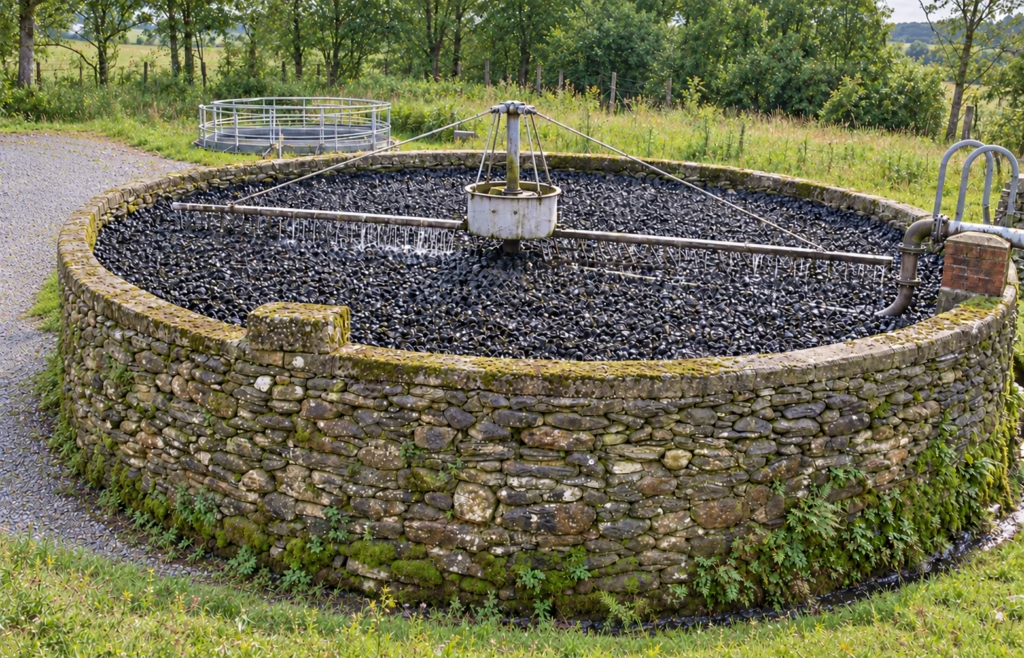
Trickling filters operate by distributing wastewater across a bed of media. A biological film develops on the media and removes organic matter as the flow passes through. This moist, nutrient-rich film also provides feeding material and sheltered breeding areas for several groups of vertebrae, including flies associated with the treatment of the settled sewage.
Common groups include Psychodidae, often known as moth flies or owl midges; Chironomidae, commonly described as non-biting midges; and Anisopodidae, which include window gnats. These species are sometimes grouped under the broader term nuisance filter flies, but their behaviour and treatment requirements differ. Psychodidae are generally small, weak fliers found close to the filter. Chironomidae may form visible swarms and orient towards trees, buildings and other large objects. Anisopodidae are larger and more lethargic and do not normally form swarms but can fly large distances away from the treatment site. The dominant species present within the filters are determined by various biotic and abiotic factors including sewage strength, hydraulic flow, film type and thickness, temperature and type of filter design.
Correct identification matters because the authorised application rate differs by target group. It also helps operators understand where adults are likely to gather, how far activity may extend and whether the population observed around the site is consistent with the larvae developing in the filter.
A single observation provides only a snapshot. Effective monitoring should record the species and lifecycle stages present, the location and scale of activity, weather conditions, relevant process changes and any previous treatment.
Repeated observations allow operators to distinguish a temporary increase from a developing population and identify the most appropriate point for intervention.
The Importance of the Larval Stage
Adult flies are the visible outcome of a lifecycle that has largely taken place within the filter. Resource Chemicals’ technical guidance states that approximately 80% of a filter fly’s life is spent in the larval stages. This is also the feeding stage, making it the point at which an ingested biological larvicide can act.
Measures directed only at adult flies may reduce the numbers immediately visible around a site, but they do not necessarily address the larvae continuing to develop within the biological film. All of the common adulticides to control adult egression have now been banned for use in and around water under EU and UK Biocidal Regulations (BPR). If those larvae remain untreated, further adult emergence can follow. A larval control programme aims to interrupt that cycle before the population becomes established above the filter.
Timing is critical. Bactimos®SC is applied through the filter dosing chamber and effluent distribution system using a calibrated metering pump. The supplied guidance identifies the second or third larval instar as the appropriate treatment stage. Species identification and routine monitoring are therefore part of the treatment decision, rather than separate activities carried out only after an application.
How Bactimos®SC Works
Bactimos®SC is an aqueous suspension containing Bacillus thuringiensis var. israelensis strain AM65-52, commonly known as Bti. Bti is a naturally occurring bacterium found in soils and water bodies. It produces protein crystals that are active against susceptible larvae when ingested.
Inside the larval gut, the active proteins are processed and bind to susceptible cells in the digestive tract. This damages the gut lining, causing feeding to stop. The Bactimos®SC technical guidance states that affected larvae stop feeding rapidly and die within approximately 24 to 48 hours.
This mode of action allows treatment to focus on feeding larvae within the filter rather than relying on broad control of adult insects around the site. When used at the authorised rate, Bactimos®SC is intended to control the target population without affecting the biological film or filter performance. It can also be incorporated into an integrated pest management programme alongside monitoring and other site controls.
Bactimos®SC is the only larvicide licensed by the HSE for use in and around water. As with any authorised treatment, application must follow the current product guidance and the requirements of the relevant environmental regulator.
Why Use a Biological Larvicide
Filter fly control must be considered alongside the biological process that the filter is designed to support. A treatment may reduce the target population, but it must also protect the film and organisms responsible for wastewater treatment. This makes specificity, application method and dose control central to product selection.
Bactimos®SC acts through ingestion by susceptible feeding larvae. This targeted mode of action allows operators to treat the developing population within the filter without relying solely on conventional insecticides directed at adult flies. The product guidance states that Bti can control target filter fly populations that are resistant to conventional chemical pesticides.
Bti has been used commercially since the 1980s, and Resource Chemicals technical information reports no induced field resistance over that period. It is also compatible with integrated pest management programmes and, when applied at the recommended rate, does not affect biological film levels or filter performance.
These characteristics support a more controlled approach: identify the species, monitor the larval population, apply the authorised dose at the appropriate stage and assess the response. The product is most effective when it forms part of this wider management programme rather than being treated as a stand-alone seasonal chemical application.
Technical Information and Application Rates
The required application is determined by the target species and the volume of effluent feeding the filters under treatment. Where the species is uncertain, technical advice should be obtained before the dose is calculated.
| Specification | Current product information |
|---|---|
| Active ingredient | 11.61% Bacillus thuringiensis var. israelensis Bti strain AM65-52, containing 123 g/l and with a biopotency of 1,200 ITU per mg. |
| Formulation | Aqueous suspension. |
| Pack Size | One pack containing 2 x 10 litre containers |
| Shelf life | Six months when stored in a cool, dry place. |
| Anisopodidae and Chironomidae | Apply 1.25 ml of Bactimos®SC per litre of effluent feed to the filter to achieve a final concentration of 160 mg/l Bti |
| Psychodidae | Apply 0.781 ml of Bactimos®SC per litre of effluent feed to the filter to achieve a final concentration of 80 mg/l Bti |
| Treatment limits | Treat only 25% of the works in one application. Make no more than one application in any 24-hour period |
| Application requirements | Humus tank settlement must be operating. Use a pre-calibrated dosing pump, trained employees and the required protective clothing. Maintain an adequate on-site monitoring programme. |
| Environmental requirement | Consult the relevant local environmental regulator before use. |
Application Example and Dose Calculation
The following worked example is based on the Resource Chemicals technical guidance and illustrates how flow, treatment time and the number of filters being treated determine the required volume.
| Calculation input | Illustrative value |
|---|---|
| Daily flow | 97.8 litres per second |
| Number of filters | 8 |
| Filters treated per application | 2 filters, representing 25% of the works |
| Treatment period | 30 minutes |
| Application rate | 1.25 ml per litre of effluent feed for Anisopodidae |
| Calculated volume | Approximately 55 litres of Bactimos®SC to treat 2 filters |
| Equivalent full-works volume | 220 litres to treat all 8 filters across the permitted applications |
The calculation is based on the effluent flow reaching the proportion of the works treated during the application period. Only 25% of the works may be treated in one application, with no more than one application in any 24-hour period. Site flow, filter configuration and target species must therefore be confirmed before the application volume is finalised.
Based on our research and guidance, a seasonal program may begin with two initial applications, followed by single treatments as monitoring shows they are required. Treatment frequency should remain evidence-led. Reapplication should respond to observed larval activity and follow the current product instructions rather than a fixed calendar alone.
Operational and Environmental Considerations
An effective Bactimos®SC programme depends on more than dose calculation. Humus tank settlement should be in operation, the dosing pump should be calibrated and the effluent distribution system should deliver the product evenly to the filters being treated. Employees must be trained and use the protective clothing specified in the current safety information.
Monitoring should continue after application. Adult activity may remain visible for a period because the treatment acts on susceptible feeding larvae rather than removing adults already present. Follow-up observations should consider larval activity, adult emergence, weather and filter performance before a further treatment decision is made.
When applied at the recommended rates, Bactimos®SC is not harmful to humans, filter non-target organisms, wildlife, non-target insects, fish or other aquatic life. Its targeted activity does not remove the need for controlled application. Treatment must remain within the authorised limits and should be supported by site monitoring.
A systematic review of Bti mosquito-control programmes found limited evidence of direct effects on many non-target groups, while also identifying uncertainty and evidence gaps where repeated applications may alter food-web relationships. This reinforces the importance of using Bactimos®SC at the correct rate, for a confirmed target population and within a documented treatment programme.
Storage planning is another practical consideration. Bactimos®SC has a six-month shelf life when stored in a cool, dry place. Operators should balance the need for seasonal readiness with realistic demand, stock rotation and the timing of likely treatment. Reviewing the previous season before procurement can reduce the risk of holding unsuitable or expired material.
Planning for Future Filter Fly Seasons
The end of the main filter fly season provides an opportunity to review what happened while records and site observations are still current. Operators should consider when activity first increased, which species were identified, how quickly adult emergence developed, what treatment was applied and whether the response reduced subsequent activity.
This review can identify weaknesses that are difficult to resolve during an active outbreak. Monitoring may have started too late, species identification may have been uncertain, dosing equipment may have required calibration or stock may not have been available when the larval population reached the appropriate stage.
Warmer summers do not create the same risk at every treatment works. Local process conditions remain decisive. However, longer and more frequent warm spells increase the value of preparation especially now during warmer, winter months. A clear monitoring method, defined escalation point, suitable equipment and access to technical support allow operators to respond to site evidence before filter fly activity becomes a wider operational concern.
Conclusion
Filter fly populations are influenced by the interaction between the biological treatment process, the species present and seasonal conditions. Visible adult activity is often a late indication of a population that has already developed within the filter, which is why effective management should focus on identification, lifecycle monitoring and treatment timing.
Bactimos®SC provides a targeted biological option for susceptible larvae. Its effectiveness depends on applying the correct species-specific rate through a calibrated system, treating within the permitted limits and continuing to monitor the site after application. It should be used as part of a planned control programme rather than as an isolated response to adult flies.
As UK summers and Winters become warmer and periods of elevated temperature become more frequent, wastewater operators should review seasonal plans against their own site history and process conditions. Earlier preparation can support a more controlled response, protect working conditions and reduce the likelihood that filter fly activity extends beyond the treatment works.
Resource Chemicals can support wastewater treatment operators in identifying target species, calculating application requirements and planning a Bactimos®SC treatment programme. Technical support can extend from laboratory testing and evaluation through to site trials, helping operators confirm the correct approach for their treatment works.
To discuss current filter fly activity or prepare for the next season, contact the Resource Chemicals team at info@resourcechemicals.co.uk or +44 (0)1280 843800.